
Dungeons & Dragons: World of Warcraft is less than a month away, and it already looks like it’s going to be a massive expansion to the tabletop game. But there are still a lot of questions about whether this new expansion is going to lean more towards the combat-oriented approach of the MMO or just be a traditional D&D game on Azeroth.
At New York Comic Con, I got a chance to sit down with Wizards of the Coast principal game designer James Wyatt to talk about the first Universes Beyond expansion for D&D. From how he was talking about the expansion, it really does sound more like a D&D game taking place on Azeroth than trying to shove WoW’s complicated mechanics and combat focus on the TTRPG.
IGN: I know that there are a lot of people who play both WoW and D&D, and I’ve heard some WoW players say that this is going to get them into D&D. Does the Expansion have a good on-ramp for those players?
James Wyatt: That is not its purpose, but I think it is a fantastic on-ramp in terms of someone who’s a WoW player. Sitting down to make a D&D character, you’re like, “Okay, what’s a Tiefling? What’s a Dragonborn? And what do these classes mean?” Whereas if you have that foundation of here’s the WoW species, here’s the WoW classes, you know the kind of character you want to make right away. This can help you steer and make those choices as a new player. We also have a very brief introductory “What is D&D?” just in case you don’t know or for people who aren’t familiar with it. And we steer you to D&D Beyond in particular as a place to find resources to help you get started.
So yeah, we took this down for a playtest at Blizzard last fall in the early stages, and Blizzard employees who had signed up, they signed up blind for a playtest of something. They didn’t know what.
And so some of them were like, “Woo, D&D. Yes, I love D&D.” And others are like, “Okay, I’ve never played it before. How does this go?” And I always love playing with new players because they don’t know what they’re supposed to do. So they are more willing to try anything they can imagine, which to my mind is really what the game is all about.
I was just telling the story of the guy who was playing the Forsaken Warlock who decided that, because he had no lower jaw, he couldn’t properly cast spells. So his first spell backfired and knocked him down the stairs. And so then he tore off his own arm and threw it at the monster.
And, awesome! That’s Dungeons & Dragons in a nutshell. It’s not “What buttons do I have to press?” It’s “What can I imagine and how do I do that? What does it look like?”
IGN: Yeah. Speaking of the combat, I know that there’s a selection of dungeons that have been poured into the game, but obviously there are just too many dungeons in World of Warcraft to bring all of them over. So why did you pick the dungeons that you picked?
Wyatt: There were a couple of factors that went into that. One of them is that we started with this section on conflicts of Azeroth, which outlines the six conflicts that really have been the driving forces behind most of the expansions of WoW and talk about how they shape the world, and how you might bring them into a campaign.
All of the dungeons, I think, tie into these themes. That was one of the things that we used as a selection criteria is, does it reflect the themes of the conflicts that we’re trying to emphasize here? So that was one. I was looking at popularity ranking on some wiki as another factor, just trying to get at what Dungeons people love and what’s resonant for them. We started with a much larger list, made it smaller. So then it was what can we do in the space that we have and what works for the various level ranges of characters and that sort of thing.
IGN: There are some people who are probably going to want to see more of the raids. I think the only raid that I saw on the list was Onyxia’s Lair, I might be mistaken. But will people be able to create their own Icecrown Citadel?
Wyatt: Icecrown Citadel, we are doing as a digital download adventure. We have a separate map pack that has five double-sided poster maps that are the boss fights from Icecrown Citadel. And that comes with a code for a digital download of the Icecrown Citadel adventure. So you can play through that. But I ran Blackfathom Deeps 20 years ago. It was just downloading the map from the internet and making up stats for Nagas at the time. And so using the tools in this book, you can absolutely adapt any dungeon you want to.
IGN: I saw some people concerned that this will be too focused on combat and having prescriptive dungeons. What would you say to that?
Wyatt: I think that’s kind of the opposite of what we were going for, because the beauty of D&D is that when you walk into Shadowfang Keep, you can talk to anybody you meet, you can interact with anything you can see. And so the possibilities just open up tremendously over what a developer can program into any game, no matter how much care they’re putting into it, because you have a DM at the table who can improvise and decide what happens.
So the dungeons that are presented here are given a pretty light touch and it’s sort of like, okay, here’s the dungeon map, here’s the pins in the map that mark the bosses that we know you’re going to encounter at some point. And what happens in between is largely a matter of improv and that you can roll on tables to generate encounters if you want a combat encounter, but you can also do something where you’re exploring the environment in a way that you can’t necessarily do in the MMO.
IGN: I take it that even the adventure hooks that you have open on that page there of Dire Maul, I’m sure people can create their own adventure hooks and assign their own reputation rewards and everything like that.
Wyatt: Yeah.
IGN: So this is for people who are familiar with Dungeons & Dragons at large. This is more of a guideline of how to play a game within World of Warcraft than anything else.
Wyatt: Yes, exactly. It is a great big toolbox. I mean, that’s how I describe most of the books that I work on. I don’t write a lot of adventure products. I do a lot of source books, and really there’s that sense of we’ve got character options, we’ve got monsters, we’ve got dungeons you can explore. We’ve got guidelines for crafting your own campaign, and we’ve got just a big blank slate for you to play with.
IGN: World of Warcraft’s obviously an evolving game that never really sits in one place. This goes up to the beginning of Midnight. Obviously, there’s going to be more stories that come out over time. Are there going to be supplemental products or will it just be like, we gave you the tools, you know the story, kind of do your own thing with it?
Wyatt: Who knows? Okay, I keep saying that if I get to do another World of Warcraft book, I might postpone my retirement a little bit in order to work on it because I had so much fun working on this, loved it so much. And that depends entirely on my relationship with Blizzard and how things go from here, but I would love to do more.
And honestly, the book doesn’t spend as much time on the War Within and Midnight as it could have. There’s almost nothing about Xal’atath in here. Would’ve loved to give her a stat block, but she didn’t sort of make the cut. And I’m not sure we could give her a stat block.
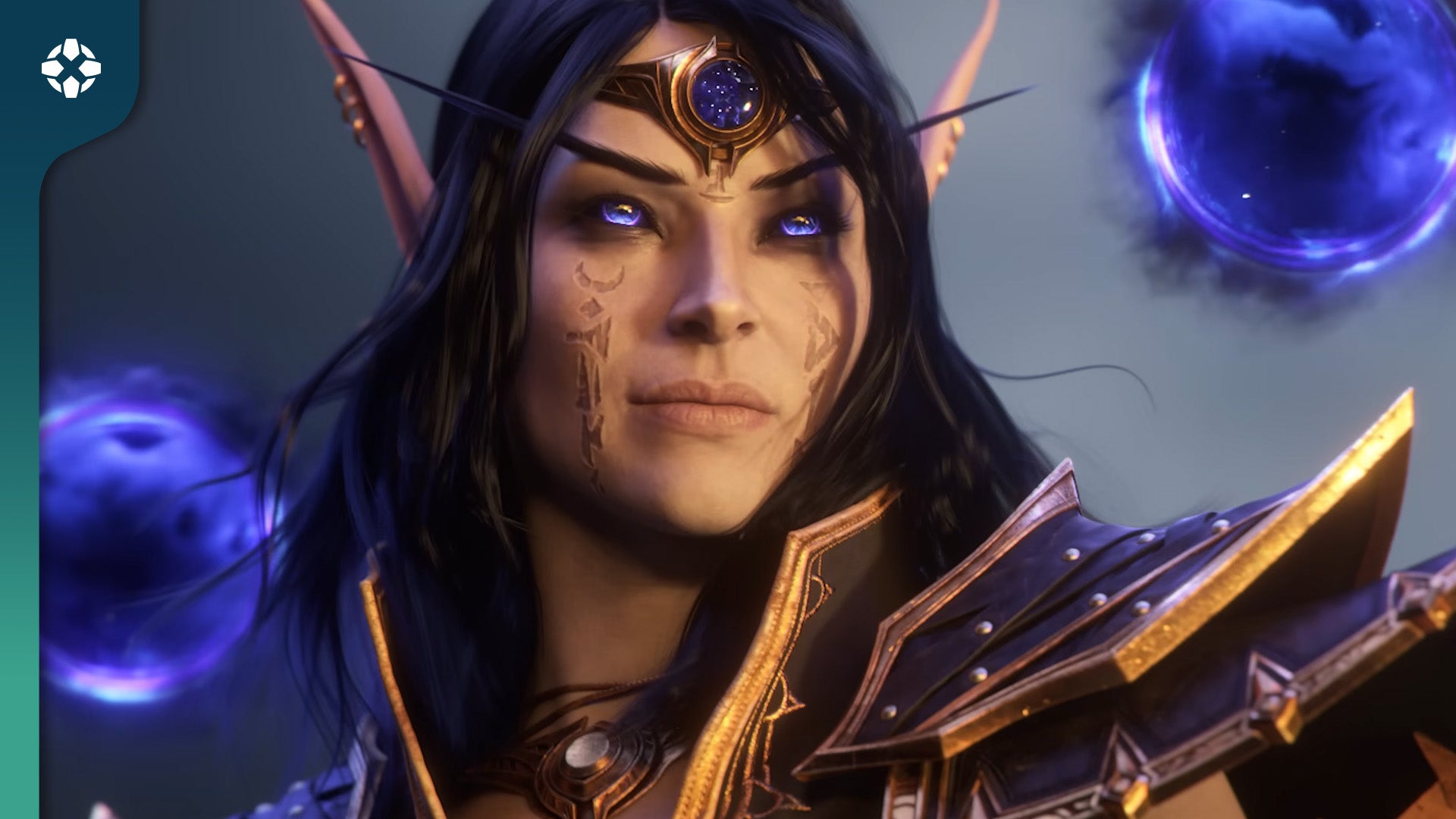
IGN: She does play into that Old Gods and the Void conflict pretty heavily.
Wyatt: Yeah. There’s absolutely more we can do even with the story that exists now, as well as future stories. And I’m keeping a list that will be my outline as soon as I get the go-ahead and start working in another book if that ever happens. But for now, absolutely, if those are the next expansion is all about, give me something that they might focus on.
IGN: The next expansion is going to be The Last Titan, so I assume it’s going to be about the Titans.
Wyatt: Right. Well, we can tell you a little bit about the Titans in here somewhere, beginning of chapter five. And honestly, my expectation is that anybody using this book is also going to spend a lot of time on the wikis because that information is there.
So yeah, we’ve got lots of resources for making a character that probably is not going to change significantly. I mean, the next time they give us a new class, it would be fun to do that in another D&D book.
IGN: Tell me a little bit about working the Devourer Demon Hunter into the book.
Wyatt: Pretty much as soon as I got access to the Midnight beta, I went and made a Devourer and started playing around with it and was reading what was, again, on the wikis about it. And so we already had the Demon Hunter set up with Havoc and Vengeance and just added some more spells and some direction about how to steer your Demon Hunter in that spec. They’ve got their own column of spells here with all the consuming soul stuff.
IGN: How did you work the WoW classes into D&D without kind of putting a wrench in the way classes traditionally work in Dungeons & Dragons?
Wyatt: The word I keep using is, rather than translation, paraphrase, that for each class I sat down and I looked at their abilities and their talent trees and all the things they can do. And I sort of cut off around level 60, I think. I don’t remember now. I’d have to look at my spreadsheets. I have spreadsheets. Nobody told me that being a writer was going to involve so many spreadsheets.
And I looked for things that are already in D&D that we want to make sure to highlight in that specialization and that class, and look for opportunities to create new spells or feats or battle master maneuvers, or anything else to help evoke the most iconic flavor things.
Talents are really fiddly in WoW and D&D mechanics are not that fiddly. We don’t deal with math at such a granular scale. And so again, evoking the flavor is more important to us than reproducing the mechanics in any way.
So each specialization has a selection of feats that would be good to help you do that. There is a fundamental difference though, that if you’re playing a healing spec Paladin, you are a healer as opposed to a tank spec Paladin, who is a tank.
And in D&D, no matter what Paladin and subclass you choose and what feat you choose, you’re both, you’re a healer and a tank. And so you’re not as narrowly defined by your role. So that remains true. And if you’re playing a Priest, you can be wearing more than cloth armor because we couldn’t easily take something away from the Cleric class to fit, and you’re still casting the spells that you expect a WoW Priest to be casting.
So all of the classes I think are a little broader and give you more range of options while still helping you focus in on the role you’re supposed to be playing.
IGN: I feel like in WoW stories, characters that embody those classes follow those rules anyways where it’s more broad.
Wyatt: Yeah. They keep saying Anduin is a priest and there he is in plate armor with his sword.
IGN: Yeah, he is a special Priest, isn’t he? So what about the mechanics for bosses? I know you described the Litch King Arthas fight, and I progressed that fight when it was current on Heroic 25, and it was hell, with mechanics like defile where you stand in it and it gets bigger. Is it as fraught or as dangerous, or is there kind of…
Wyatt: I mean, he’s challenge rating 25, where D&D characters go up to level 20. So you know, it’s going to be a tough fight. It’s different because D&D combats are shorter in terms of the number of things you or the boss can do in the fight because they often take long enough even at three or four rounds compared to how quickly an MMO raid battle plays out, relatively speaking. So again, that idea of paraphrase rather than translation, we’re trying to evoke the feeling of that fight without reproducing it exactly. But there’s a lot going on here that will feel very familiar.
IGN: Could you go in and talk Arthas out of invading Azeroth with the Scourge or sneak in and steal the Helm of Domination and put it on yourself?
Wyatt: Theoretically. You can certainly try. And that’s again the beauty of it, that you can talk to anybody.
IGN: Can you tell me a little bit more about the reputation system? Why did you think that was such an important thing to work into a Warcraft tabletop game?
Wyatt: So the renown system in the Dungeon Masters guide is sort of an optional rule. It’s not something that we spend a lot of time with in the base game, but it is a great tool for giving factions in the world some kind of heft, a significant impact on characters’ lives.
And so given particularly the importance of the Alliance and the Horde, and also the other factions in the game, I thought it would be pretty cool to use the renown system to reflect, to give characters some investment in those factions.
But fundamentally, you start caring about the welfare of the Horde if you’re fighting for the Horde, and you’re getting renown with the Horde, and you’re getting benefits for that devotion to them.
So it’s not load bearing. You can ignore it if you want to. The campaign that I’m playing in right now, it’s weird because we’ve time traveled. We’ve gone back from Midnight to Classic. And so I’m not sure any of us are fully rooted in the world yet, but I’m really curious to see how that plays out over time.
I think we might have just gotten a renown reward in our last adventure, but I can’t remember for sure. So yeah, it’s fun. It’s a way to root characters in the world and it’s not essential. In the Icecrown Citadel adventure, we do a whole separate thing for your Renown with the Ashen Verdict, which goes up more quickly than you might expect Renown to go up in the core book.
But then you can get your rings improved by Armis the Penitent as your renown increases, and you’re also collecting things that can make Shadowmourne and doing all of that in the context of working through the raid once rather than working through it repeatedly.
IGN: I think that’s where the friction in my head is at. Because of all the time I’ve spent in WoW, I associate reputation with these massive grinds.
Wyatt: Yeah. That really is the key difference that even in Icecrown Citadel, I planned it out so that you get to, I think you get to 50 just about the time you kill the Lich King.
But it’s like every single encounter in the Citadel, your renown increases by one or two, which is bigger than the rate we expect for most of these factions. The general idea is, and in the DMG, we even give you a conversion. If you don’t want to track renown points, you can just use character level so that by the time you’re 17th level, we assume you’re exalted with your home faction.
IGN: On the time travel thing you mentioned earlier, the Chromie time. So for me, in the actual video game World of Warcraft, Chromie Time always felt kind of shoehorned in as “we need to get you to end game as fast as possible.” And Chromie Time was just kind of the method to do that. Why Chromie Time?
Wyatt: Well, two things going on. The first is that Chromie wrote a little introduction to the book.
IGN: I love that.
Wyatt: Me too. Thank you. Where she’s basically saying, “I put this book together to let you visit whatever part, basically to give you your own timeline to play in.”
It’s a way of expressly giving the reader permission to ignore Canon, fundamentally. That’s all it is. The specific example of the campaign I’m playing in, that’s our DM’s concoction of, okay, the campaign I want to run is modern characters.
We started off in Silvermoon City. We’ve just repelled Xal’atath. We’re eight characters. We’ve just helped support the effort to repel Xal’atath. And then suddenly the time stream changes and we’re in a Silvermoon city that is run by dragons. And what has happened?
So we fight some dragons and get to safety and meet Chromie who says the time stream’s gone amuck. I’ve got to send you back 20 years to before this to prevent whatever the Infinite Dragonflight has done to mess up the timestream. So that’s the story we’re playing, not essential to what’s in the book.
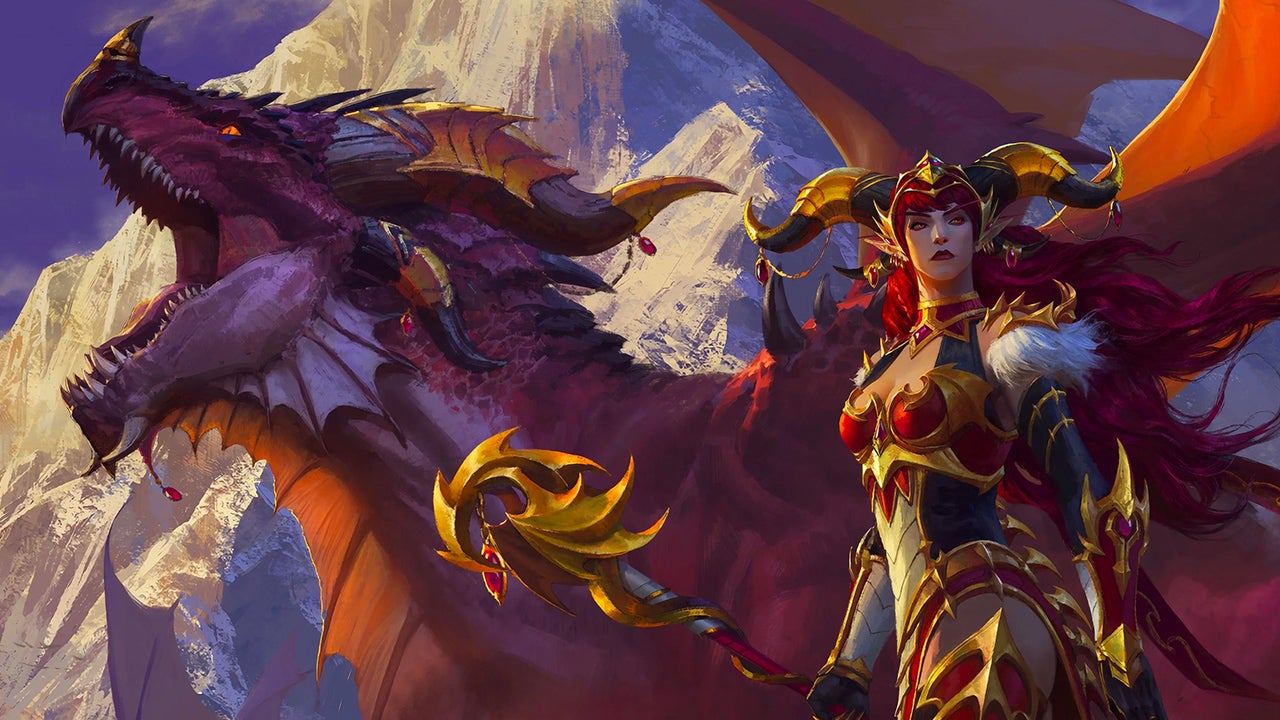
IGN: Okay. So it’s not some scheme for Chromie to become the Bronze Aspect?
Wyatt: Who knows? Maybe in your campaign.
IGN: She deserves it.
Wyatt: It’s true. She’s also got little notes scattered throughout the book.
IGN: Oh yeah?
Wyatt: Not very many of them, but wherever we had space on a page, she wrote a little note. “All these King Gorducks, or is it King Gordock? Anyway, I think all Big Ogres would benefit from spending some time small.”
IGN: I think they would. That’s a great addition. My final question is about Forever. I know you mentioned that it came out too late to get added to the book in any meaningful way, but if somebody wanted to add the Skyborne race or add the new zones that were added in, which I think a lot of the new zones in Forever were kind of cut content that existed in vanilla anyways, like Mount Hyjal.
Wyatt: Right. Yeah. I remember seeing that big blank spot on the map because I was playing early on. Yeah. Adding a new Elven lineage is not super complicated. It might be fun for us to talk to Blizzard about maybe doing that in a D&D Beyond drop or something.
But anything else that they’ve added content-wise, I think the content that they’re adding is very easy to just port into the D&D campaign you’re playing. And again, you can do anything you want. You can go anywhere you want.
IGN: I have to ask: Would you rather play Forever or Retail?
Wyatt: I wish I had time to do both. Right now I really don’t have time to do either. So I’ve been dabbling with forever just a little bit, but I’m anxious to… I haven’t finished the Midnight storyline yet, I think. So I’m anxious to get back to that, too.