
It may be 25 years old now, but Halo’s first installment still has the power to wow. Combat Evolved is packed full of awesome moments: the first view of the titular ringworld arching above you, the Covenant swarming onto the Pillar of Autumn, and driving a warthog through vast Forerunner structures. And as you push forward through Master Chief’s debut mission, there’s the sense of a rich universe being teased, whether its ancient civilisations or the extent of humanity’s reach across the galaxy. The series’ founder, Bungie, created a universe with so much intrigue that its expanded universe was able to begin before the first game even launched – the beloved prequel novel, The Fall of Reach, was published a couple of weeks ahead of Combat Evolved’s launch.
Today, the series’ current stewards, Halo Studios, continue to expand the universe through novels, comics and, soon, the new missions of the Halo remake, Campaign Evolved. And however the quality of Halo’s constantly-unfolding saga might be judged, this multi-medium expanded universe has become a tremendous and rarely matched project.
New Missions, Knotted Histories
Campaign Evolved’s new three-mission miniature campaign, dubbed Operation METEORITE, returns to the legendary pairing of Master Chief and Sgt. Johnson. We know very little about the plot, aside from it being set a year prior to the original story, but the trailer suggests a load of Halo staples will be present, including Johnson at his wisecracking best and combat fought through the purple facades of a Covenant vessel.
Operation METEORITE will send the duo down onto an agricultural planet, a setting that could act as a gateway to Halo lore that was written long after Combat Evolved first arrived. Will Johnson look back at his time on the planet Harvest, fighting the first ever Covenant incursion, as detailed in Joseph Staten’s 2007 novel, Contact Harvest? And will the planet be occupied by the Insurrectionists, the human threat to the UNSC that preceded the species-threatening Human-Covenant War that have featured in numerous novels, comics, and even anime shorts and marketing beats? The Halo universe is so expansive now that it’s hard to imagine these missions being able to avoid some of the deeper lore. To do so would risk disappointing fans.
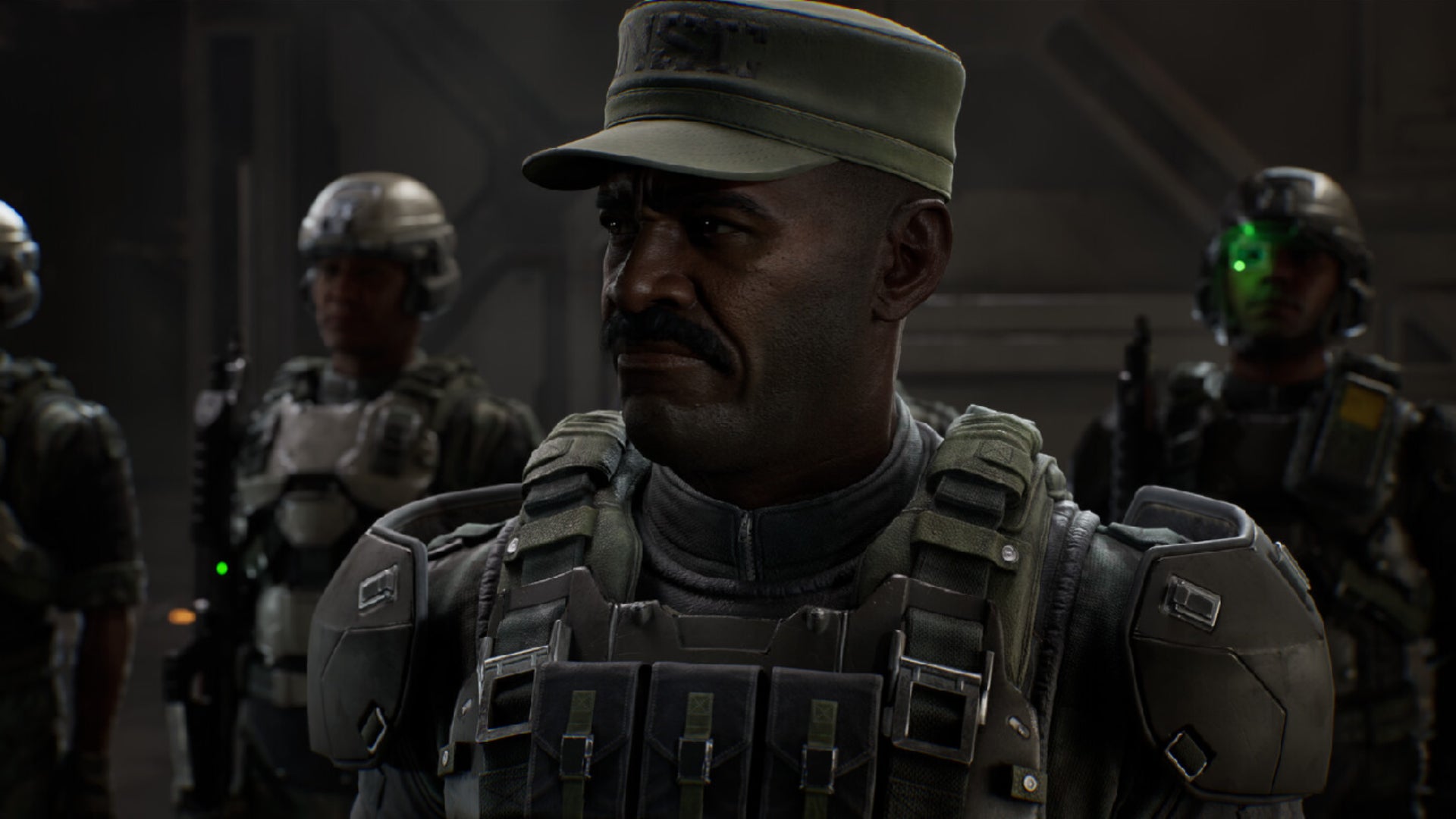
The involvement of Troy Denning, a current key writer of the series’ novels, is the biggest hint that Campaign Evolved’s new missions are not just going to be a bit of frivolous, nostalgic gunplay. He has experience writing about many different facets of the universe, whether delving into the dynamics between Elites – or Sangheili, as readers will know – or showing the Chief taking on an Insurrectionist stronghold. It’s possible that he’s been brought on board to elegantly weave in some elements of the deeper lore. He’s also clearly simply trusted to weave a compelling story, with Denning being not just a Halo stalwart but historically having crafted galaxy-upending Star Wars novels.
The big difference between Halo and Star Wars, though, is the level of cross-pollination. Unlike in Star Wars, where the theatrically-released movies are clearly the series’ main vehicle, Halo has a much looser approach to which storytelling medium matters the most.For instance, while Sgt. Johnson is undeniably a vital part of the original trilogy, his background is largely absent from the games. They portray Johnson as a smart-mouthed, confident leader, but one also with fierce, honest compassion for his fellow soldiers. The expansion of his narrative in the novel Contact Harvest, meanwhile, is not an insignificant bit of trivia; it makes Johnson more than just a hero, and rounds him into a flawed character. He’s devoted and simultaneously deeply troubled, living with the guilt of his involvement in the brutal suppression of human enemies. Such an understanding of the character makes his trajectory to self-sacrificing heroism all the more affecting.
It’s unlikely that Master Chief will start wistfully bringing Johnson up to speed on his own past in Operation METEORITE, given that the trailer has the latter rib him for his stony manner. However, Master Chief’s story has also been significantly fleshed out in the novels, starting as far back as Halo: The Fall of Reach. The book is a fan favourite, and its importance in setting up Halo’s lore is enormous: the Spartan’s creator, Dr Catherine Halsey, is introduced; Master Chief’s name is revealed as John (which didn’t happen in the games until Halo 3); Chief is shown to be part of a squad of Spartans known as Blue Team. The character’s uniquely, oddly taciturn nature is also given an implied origin, with Chief experiencing the death of a fellow Spartan in their childhoods. It was a popular enough novel that Bungie directly addressed the changes they made to book canon in Halo: Reach, and it’s likely its popularity is a reason that game got greenlit.
In short: Halo’s expanded universe has always mattered.
Halo’s Fandom Fights an Infinite War
The continued expansion of Halo is something that clearly has significant appeal for many fans, with the franchise’s dedicated wiki – unsurprisingly known as Halopedia – still seeing regular updates of tremendous depth. Detailed articles exist, of course, for the shooter’s great range of weapons and vehicles. Perhaps more surprising to fans of just the games is the fact that novels and their characters have been lavished with massive amounts of attention. A case in point is Rion Forge, a smuggler-turned-hero who exists only in the books but has been extensively documented, with not only a lengthy biography but also paragraphs that detail her personality traits. Some fans have distaste for anything Halo that exists outside of Bungie’s 2001 – 2010 stewardship, but this extensive, ongoing passion project shows that such feelings aren’t universal.
Some are unhappy with the way the narrative has unfolded without Bungie, but it’s arguable that the knottiness of Halo tales began near enough at the series’ start. The first game’s thrilling simplicity was almost immediately altered for its direct sequel, with a secondary storyline opening up that explores the fractures within the fragile, faith-driven Covenant. Multiple villains, complex motivations, and a range of locations across space changed Halo from being purely a twist-driven thrillride. The change wasn’t even into a Star Wars-style space opera, with the politics of different factions instead making it – at least on a narrative front – more reminiscent of the serious-minded Dune. The groundwork was laid here for the non-Bungie Halo 5, a controversial game which turned Master Chief from an exceptional lone warrior to another Spartan within Blue Team.
Regardless of what people think of making Halo more novelistic, a transmedia approach was needed for Halo to survive past 2010. The series easily could have ended with the departure of Bungie, especially given that Halo 3 and Reach capped off the saga’s original story. Halo 3 ends with Master Chief settling himself in a cryo-pod, bringing his story full circle to his original emergence from one. Halo: Reach rewinds time to just before the very first game, exploring the planet that was tantalisingly namedropped by Captain Keyes in Halo’s opening. The only way the story could continue was for it to be interested in the nooks and crannies that were the territory of spin-off media.
Bonnie Ross, who led the franchise between 2007 and 2014, pitched the transformation of Halo – as she explained to us – into what it has been for the vast majority of its lifespan. Her pitch to Microsoft was to create an internal studio, which became 343 Industries, that would steer the whole Halo franchise forward. Her passion, too, was not just for the games but the wider universe – especially as her entry point was, unsurprisingly as far as novels go, The Fall of Reach.
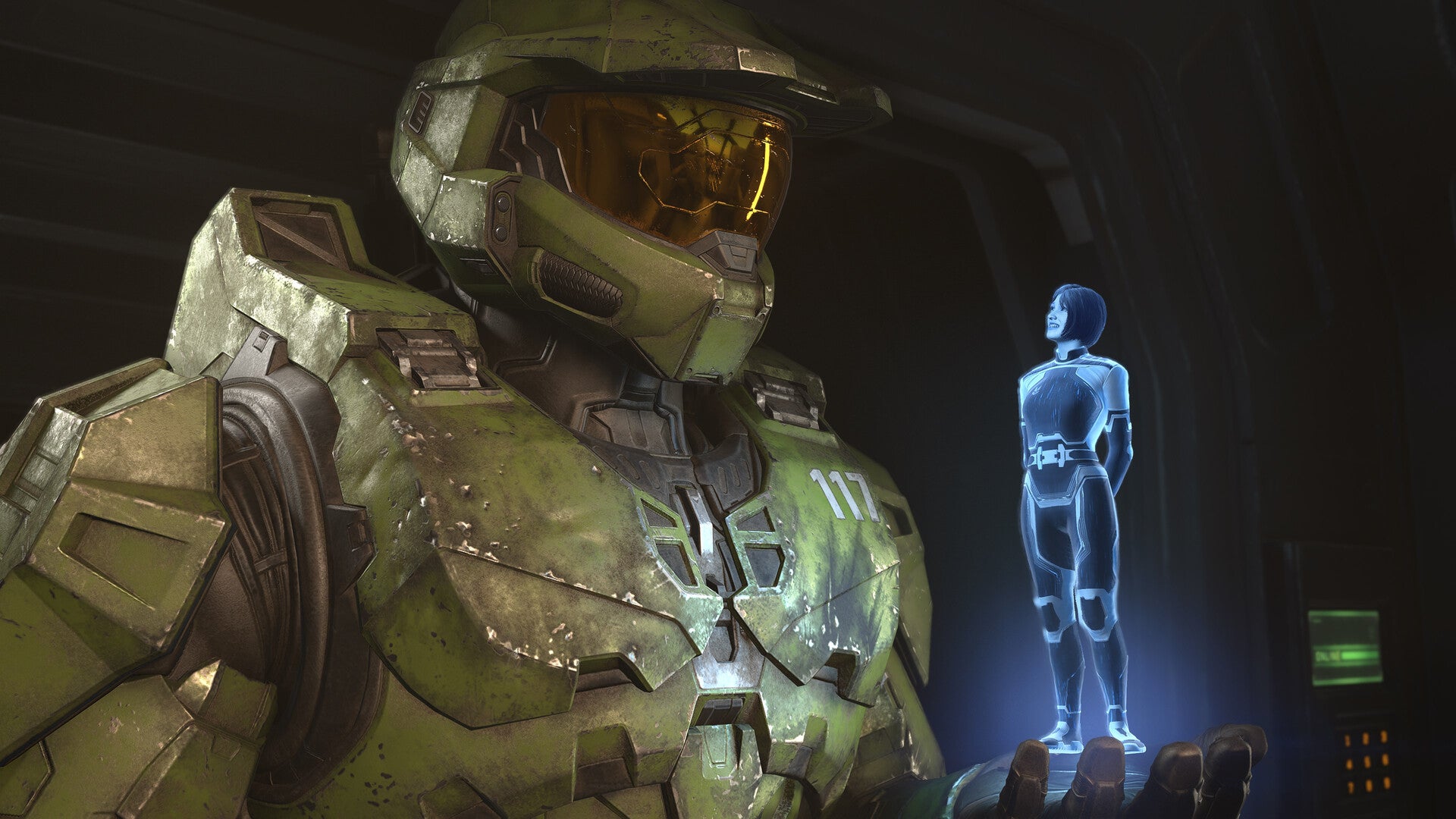
It’s reasonable to say that the franchise is more divisive now than it has been historically, with the story that threaded through Halos 4, 5, and Infinite not always having landed successfully for some critics and fans. It’s also reasonable to say that it’s more ambitious. The original trilogy is very much about Halos, with the final part of that story taking players to the Ark, a structure that is part super-Halo and part Halo docking station. Despite its more rocky reputation, the second trilogy introduces Forerunners, a range of planets, an AI takeover, and so many other things that make it much more than just a repeat of the hits.
Essentially, 25 years of Halo means that there is a Halo for everyone now. The Paramount TV show was derided for having Master Chief take off his helmet and for overly-humanising the Spartan, but it is just one interpretation of a story which has been viewed from so many angles. Take the novels: Contact Harvest gives a grunts-eye view of the series, Ghosts of Onyx a look at the life-long sacrifices of soldiers, and Cryptum delves into the ambition and folly of the Forerunners. Not every story is a straight action-adventure, and the games themselves move between pure fun like Infinite and the lore-heavy stylings of its direct predecessor. But this desire to expand has meant Halo has eschewed being forgettable pulp and become a textured, morally complex, multidimensional universe.
This is not to suggest that the storytelling has been perfect or that it hasn’t been detail-obsessed. It is an argument towards appreciating the vast expanse of this creative universe, one that has been bold enough to pose questions and then to answer them. Fans might have mixed feelings today, but it’s easy enough to imagine that Halo players back in 2001 would have been thrilled to get their hands on a Forerunner-driven title like Halo 4. There’s hope that Campaign Evolved’s new mini-missions might not just be a bit of extra fun, but could give its stewards the confidence to keep expanding this vast universe.
Ceridwen Millington is a journalist, gamer, and reader who is almost always ready to dive into science fiction.