
The HyperMegaTech Super Pocket Rare Edition is the seventh Super Pocket device to date from Blaze Entertainment. Part of the Evercade ecosystem, it’s the same hardware as previous Super Pockets, but with 14 built-in classic Rare-developed games, with a matching color scheme to boot. Although Rare is now part of Microsoft, this collection highlights some of the best games from the developer’s earliest 1983 British computer releases up to the headlining 1998 Nintendo 64 classic, Banjo-Kazooie, which has been rebuilt to run natively. Thanks to its eclectic built-in games and ability to play any Evercade cartridge, this Super Pocket easily sustains the high relative value of its predecessors.
HyperMegaTech Super Pocket Rare Edition – Design and Features
The Rare Edition maintains the same design and features as its predecessors. It’s a plug-and-play handheld that comes with a USB-C to USB-A charging cable, quickstart guide, and instructions for Banjo-Kazooie. The other 13 games have control summaries in-game, accessible when pressing the Game Menu button.
The Super Pocket is a compact Game Boy-adjacent size at 3.07 x 4.92 x 0.98 inches and 0.36lbs. Its 2.8-inch IPS display has a resolution 320 x 240, which is a 4:3 aspect ratio. Display options include Original, Pixel Perfect, or Full Screen aspect ratios, as well as Shaders/Scanlines. While you can’t adjust the brightness, the screen is easily visible in bright sunlight, although the glossy screen cover is susceptible to glare.
Since many of the games on the Evercade platform are originally of a relatively low resolution with limited detail, the small screen size is generally fine. However, if you’re in the 40+ demographic, you may not find it as comfortable as today’s larger screens, particular with smaller text. Still, it works well for what it is, especially at the $69.99 retail price.
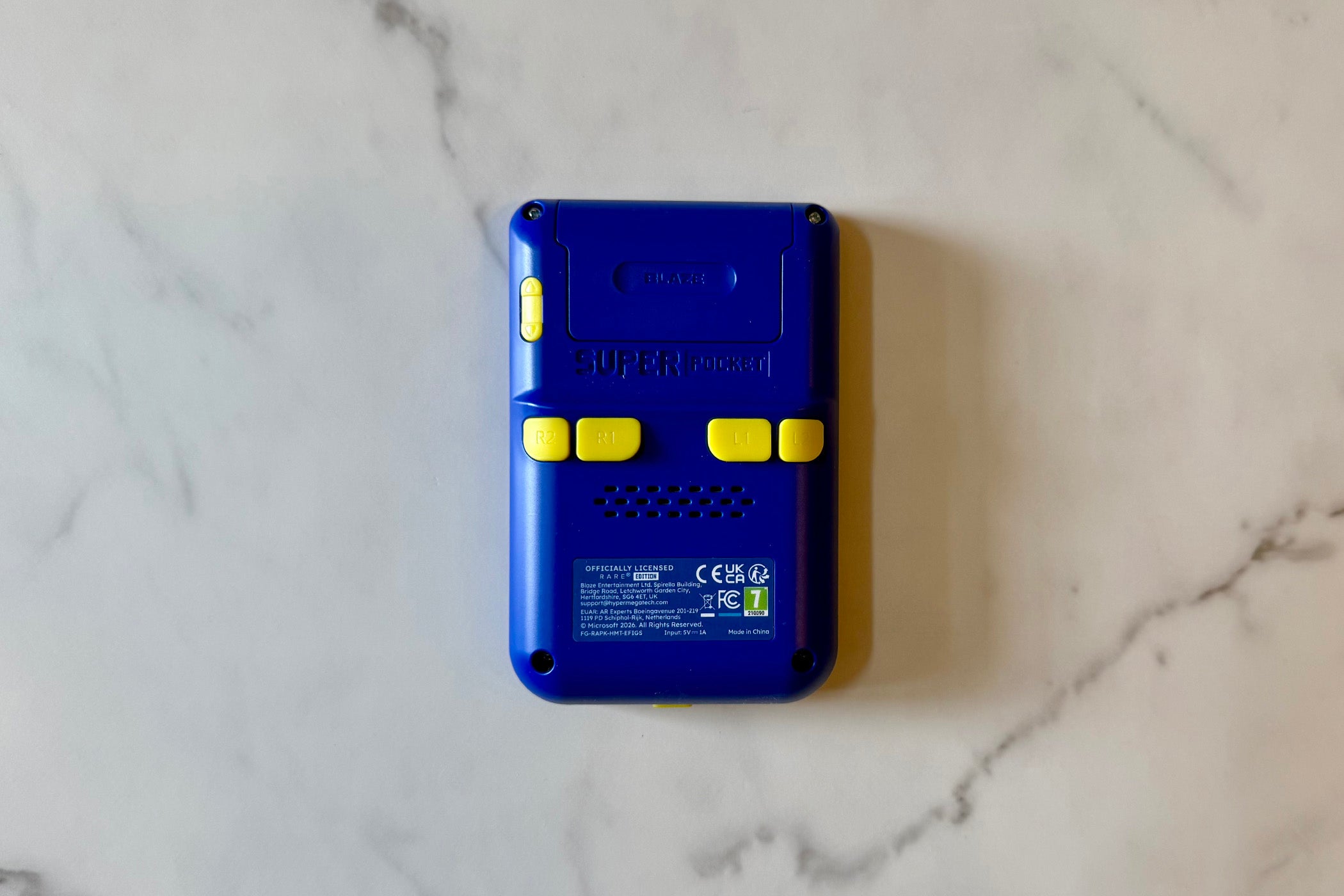
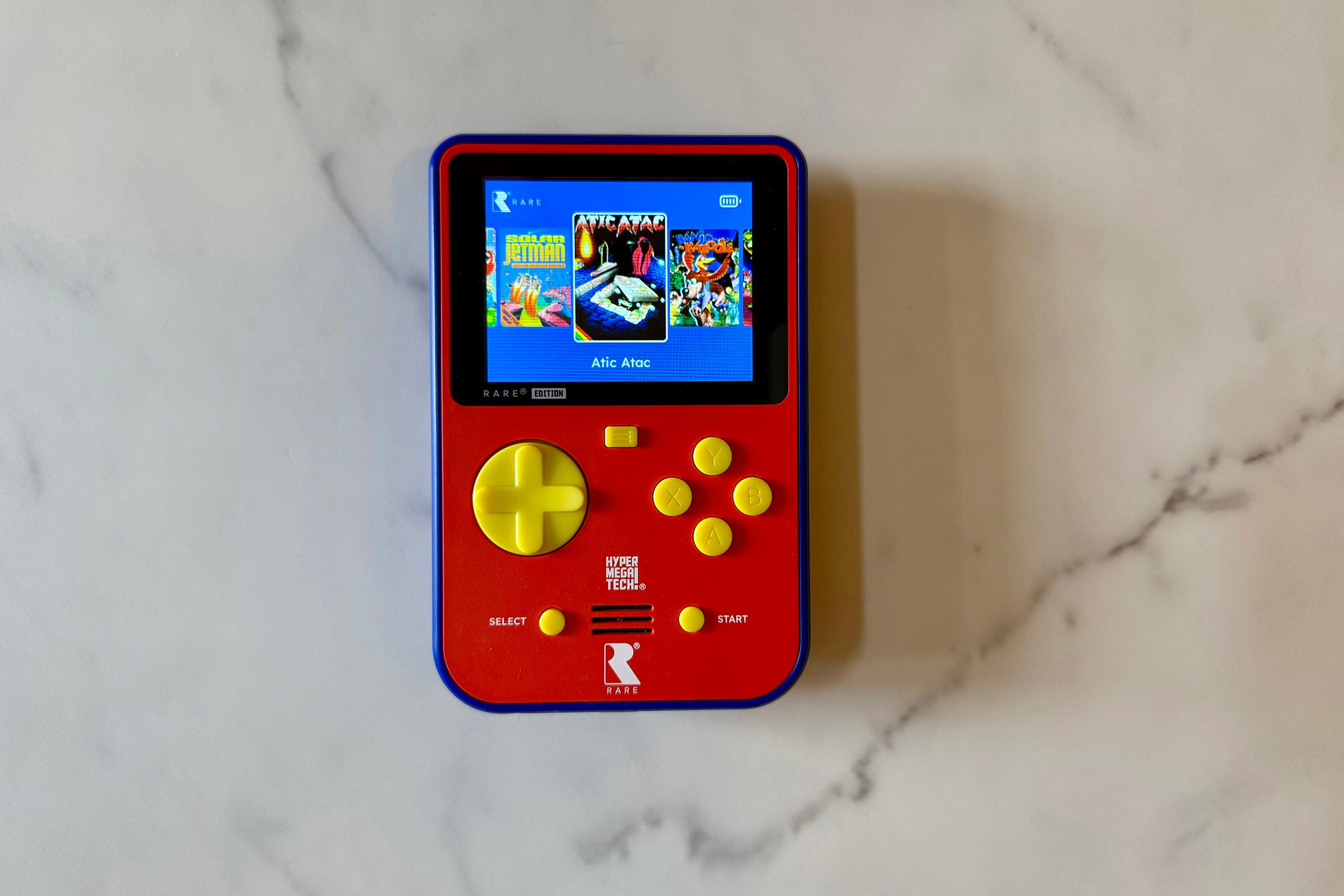
Below the display is a Game Menu button, direction pad, front speaker, Select/Insert Credit button, Start Game button, and the A, B, X, and Y face buttons. On the rear is a cartridge slot, which includes a blank dummy cartridge, volume control, and R1, L1, R2, and L2 buttons, the latter two of which are used to fast scroll in menus. All buttons are membrane-based, but there’s still a good tactile response with a soft click when pressed.
Below the R and L buttons is a rear speaker, which together with the front speaker provides decent sound, even at high volumes. Naturally, for the best sound you’ll want to make use of the 3.5mm headphone jack to the left of the power switch at the bottom of the unit. Unfortunately, Blaze hasn’t chosen to support Bluetooth audio until the release of its Nexus handheld.
Between the power switch and charging port is a charging indicator light, which shows red when charging or green when fully charged. The 3000mAh battery gets up to four hours or so of run time.
HyperMegaTech Super Pocket Rare Edition – Built-in Games
The 14 built-in games are Atic Atac, Banjo-Kazooie, Battletoads, Battletoads in Battlemaniacs, Cobra Triangle, Conker’s Pocket Tales, Gunfright, Jetpac, Knight Lore, Lunar Jetman, R.C. Pro-Am II, Slalom, Snake Rattle ‘n’ Roll, and Solar Jetman. These games originally appeared on the ZX Spectrum, Nintendo 64, NES, SNES, and Game Boy Color, respectively.
ZX Spectrum
Thanks in part to its low price, the Sinclair ZX Spectrum proved to be one of the most popular personal computers in the UK from its release in 1982 to its discontinuation in 1992. Although its base model featured limited memory, sound, and graphics, with the latter’s color suffering from attribute clash that caused “bleeding” or flickering when a foreground character interacted with a background, there nevertheless proved a certain charm to the platform. Rare was among the best ZX Spectrum developers, taking good advantage of the bold color palette and crisp 8-bit visuals, and there’s a good representation of its best output from this era here. Unlike the rest of the 14 built-in games, it’s fair to say that most of these five will be an acquired taste, although arguably worth the effort for those with a more open mind.
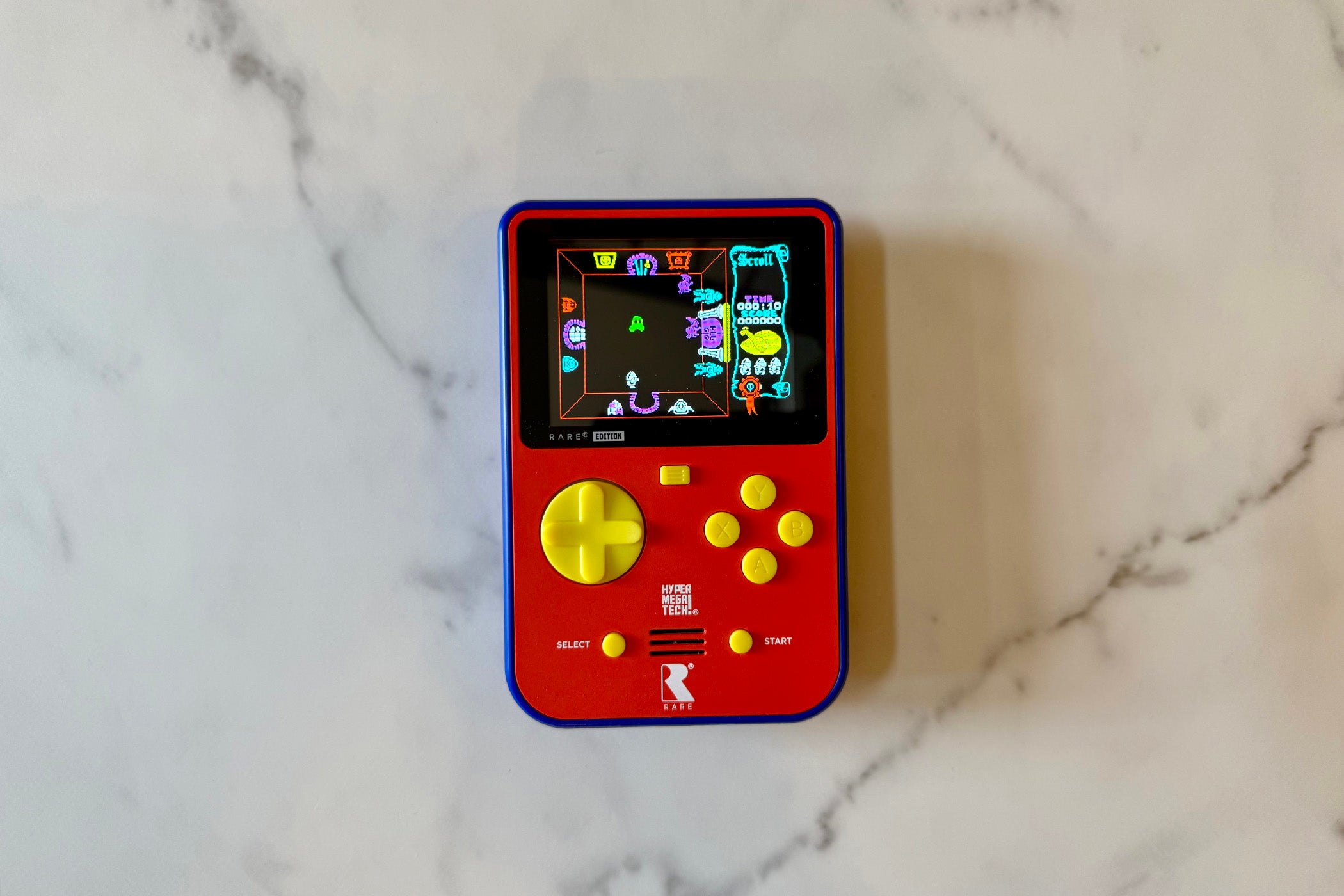
Atic Atac (1983) and Knight Lore (1984) are two notoriously difficult isometric 3D action-adventure games, and considered among the best in their class. The former is a fast-paced, gothic-themed maze game focusing on survival and item collection, while the latter is an atmospheric puzzle-platformer that relies more on precision movements. Although the sound can be grating, the high-contrast visuals against the black background really pop on the Super Pocket’s display. I also found the controls to be spot-on.
Jetpac (1983) and Lunar Jetman (1983) are two very different games in the same series. The former is a stand-out single-screen arcade-like experience where you build a rocket while defending against waves of aliens. The latter is the vehicle-based sequel that adds gravity and terrain exploration, greatly enhancing the scope. I found both games a bit more difficult to control on the handheld than I’d like, with awkward use of the L1 or R1 buttons to hold a hover.
Gunfright (1985) is a western-themed shooter that has isometric 3D exploration and pseudo-first-person quick-draw sequences. It’s a unique and ambitious game, although again, the sound is incredibly grating.
Nintendo 64
Banjo-Kazooie (1998) is the one Nintendo 64 game included, the obvious marquee title, and one of the most acclaimed highlights from Rare’s 3D era. Strictly speaking, this is not standard emulation, nor a remake, but the original game logic running natively on the Evercade hardware. This is a good thing because of the obvious lack of the Nintendo 64’s analog stick and button layout on the Super Pocket.
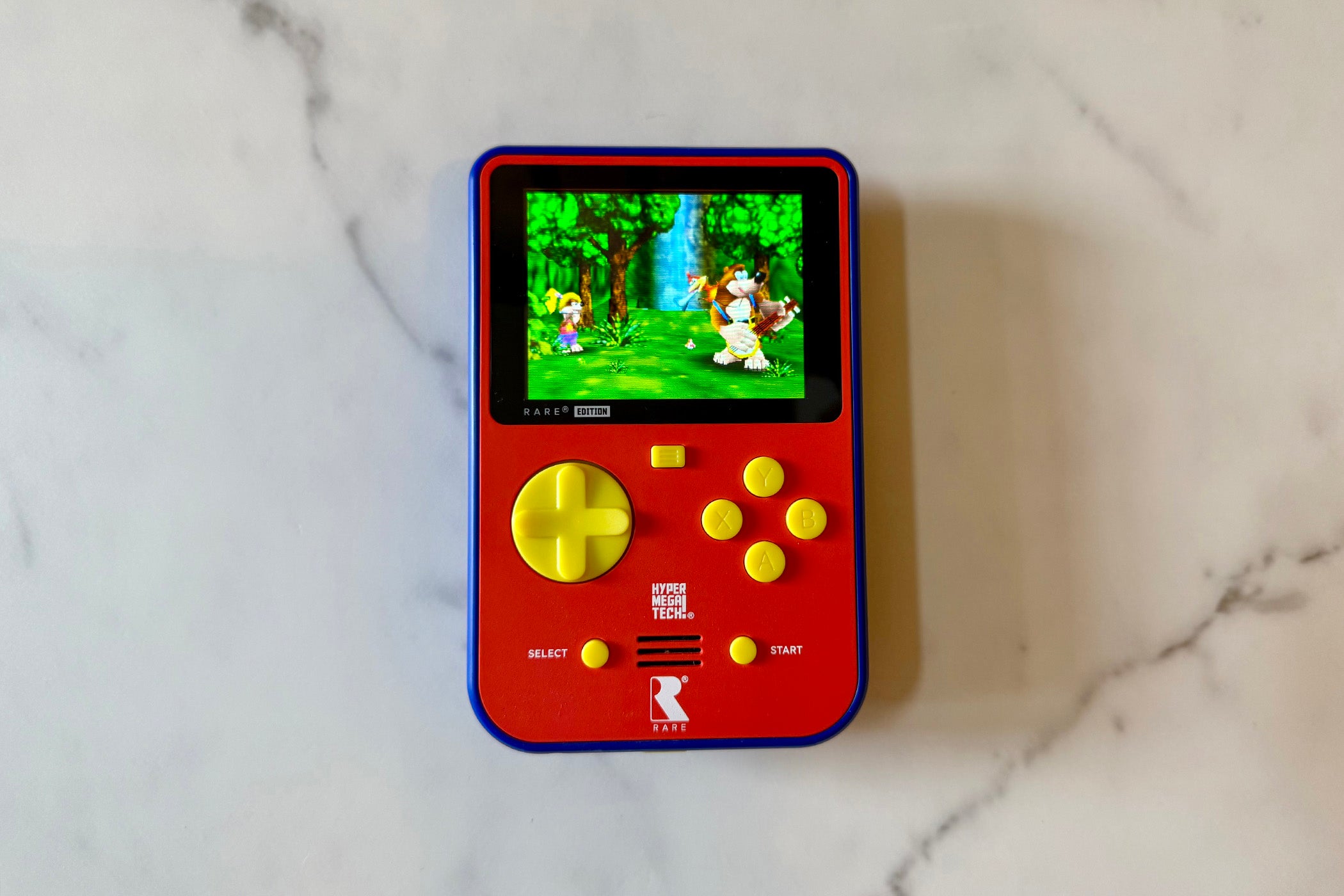
The game is a 3D platformer brimming with personality where a bear and his bird companion journey through diverse, puzzle-filled worlds to defeat a wicked witch and rescue a kidnapped sister. While many Nintendo 64 games can look a bit rough, especially on modern displays, this port has a sharper, more refined appearance without changing the original look and feel.
In terms of controls, there’s a Replay Mode and Retro Mode. Replay Mode attempts to modernize the controls within the Super Pocket’s limitations, while Retro Mode tries to more closely mimic the original control scheme. Whichever mode you choose, there’s going to be a learning curve, as there’s just no good way to duplicate analog or camera controls with just button combinations. Fortunately, in-game button prompts map to the updated control scheme.
While I can’t say this is the best way to play Banjo-Kazooie, it’s still a solid portable experience if you put in the effort to learn the controls and don’t mind the lack of controller rumble. One thing to note is that, as with other “native” Evercade games, it works a bit different from most other titles in the library. Instead of the usual save states, Banjo-Kazooie uses the original “Witchywarp” pads and save pedestals. You also have to power cycle the handheld to exit the game rather than being able to exit from the Game Menu button.
NES
Although perhaps not as technically well-regarded as the company’s ZX Spectrum era, Rare nevertheless made some genuinely fun, and legendary, games for the NES. Many of the releases feature a refined isometric 3D perspective seen in the earlier ZX Spectrum titles.
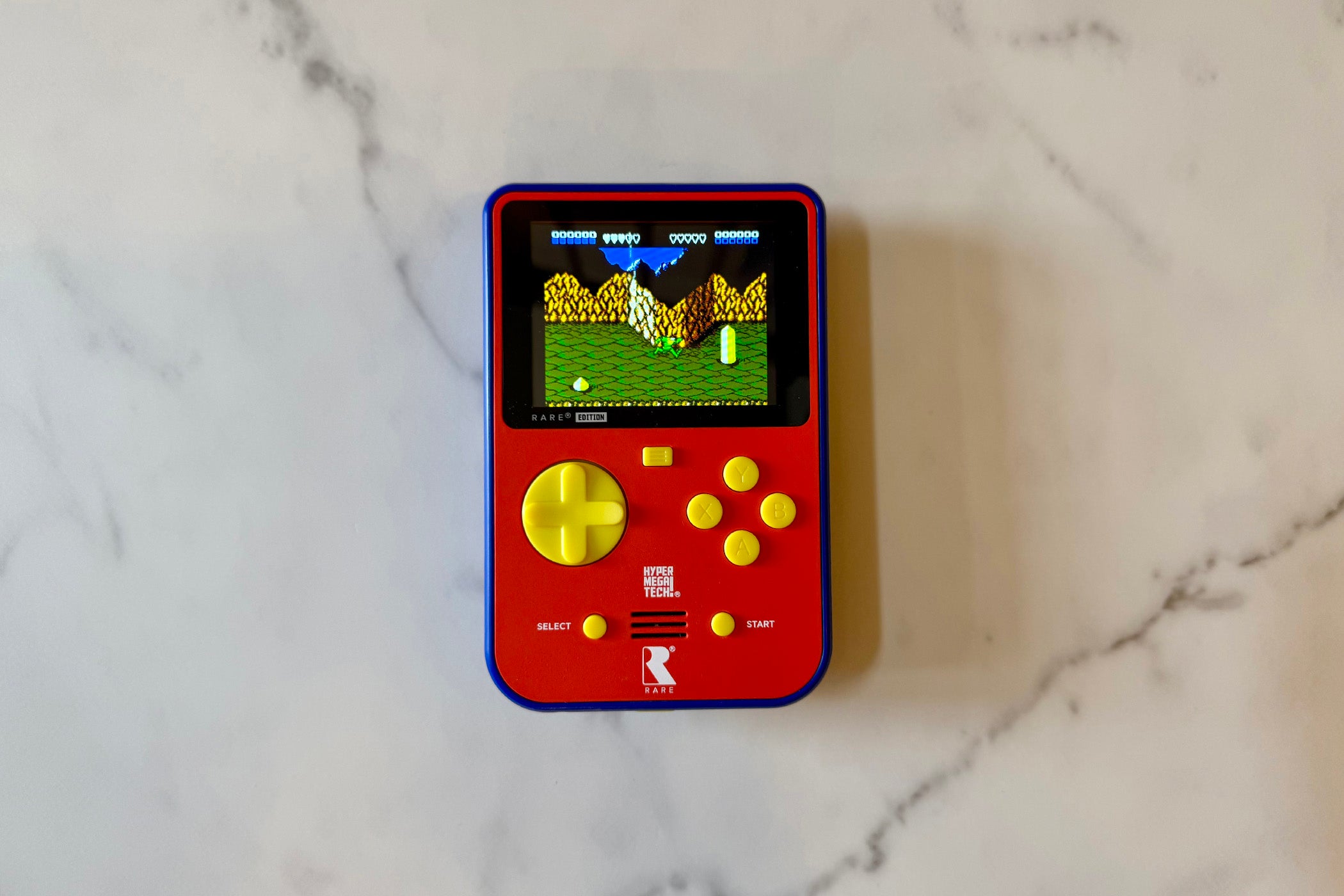
Slalom (1986) is Rare’s first NES release and a simple, fast-paced third-person skiing title. Cobra Triangle (1989) is an ambitious, multi-genre isometric 3D boat combat game. Snake Rattle ‘n’ Roll (1990) features the popular “eat-to-grow” gameplay mechanic and uses its isometric 3D perspective for exploration. Solar Jetman (1990) is the third game in the Jetman series after Lunar Jetman, and is like an evolved, if overly difficult conclusion to the original series with RPG-like elements. Battletoads (1991), which looked at the difficulty of other Rare games and said “hold my beer,” is an iconic, genre-blending beat-em-up. R.C. Pro-Am II (1992) is an elevated sequel to what was already one of the best isometric 3D racing games ever made.
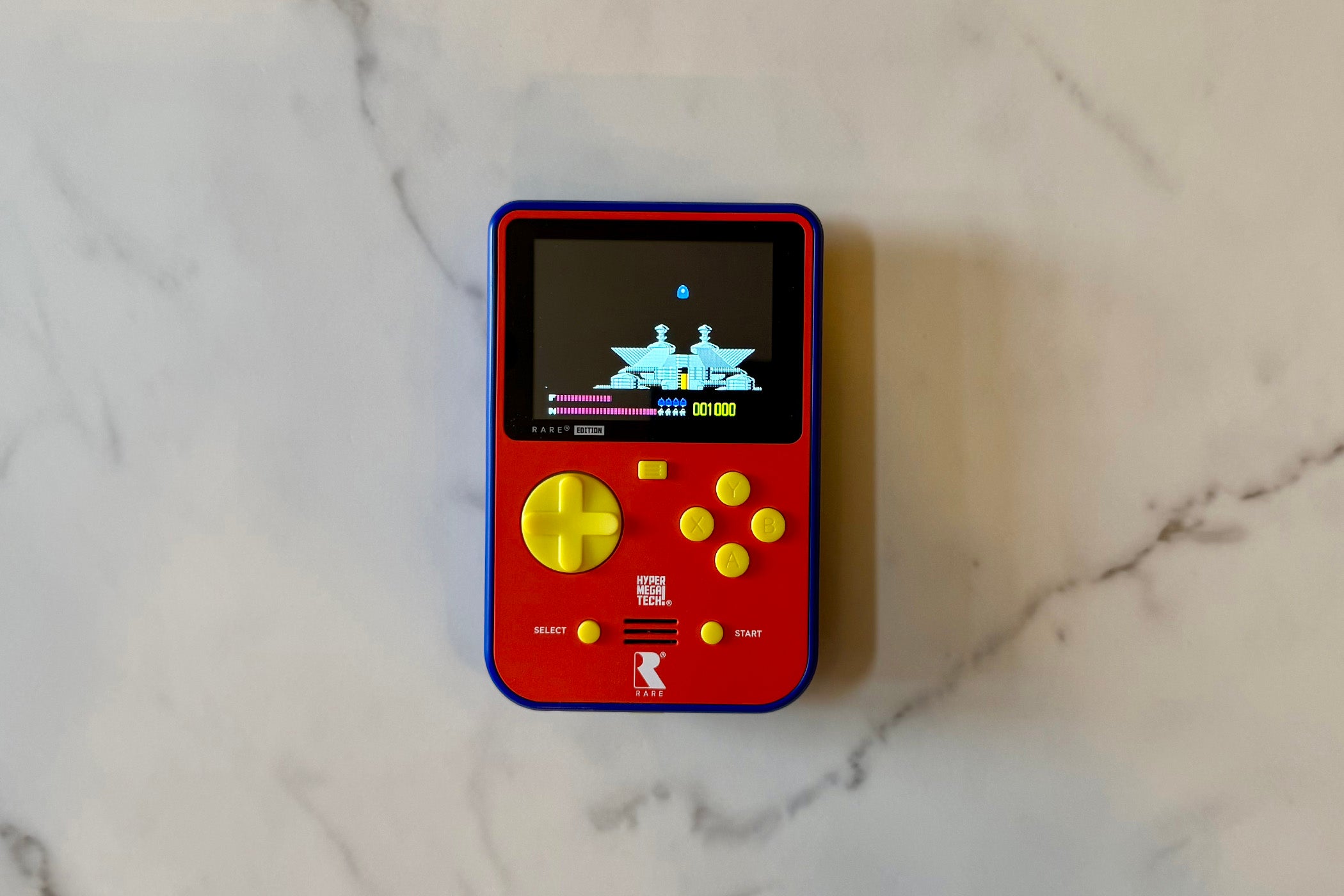
Difficulty aside, I had a great time with these NES games on the Super Pocket. The display and controls are well-suited to the platform’s requirements.
SNES
Battletoads in Battlemaniacs (1993) is the one SNES game included and the direct sequel to the original NES Battletoads. It’s the same type of game on the SNES, just more refined.
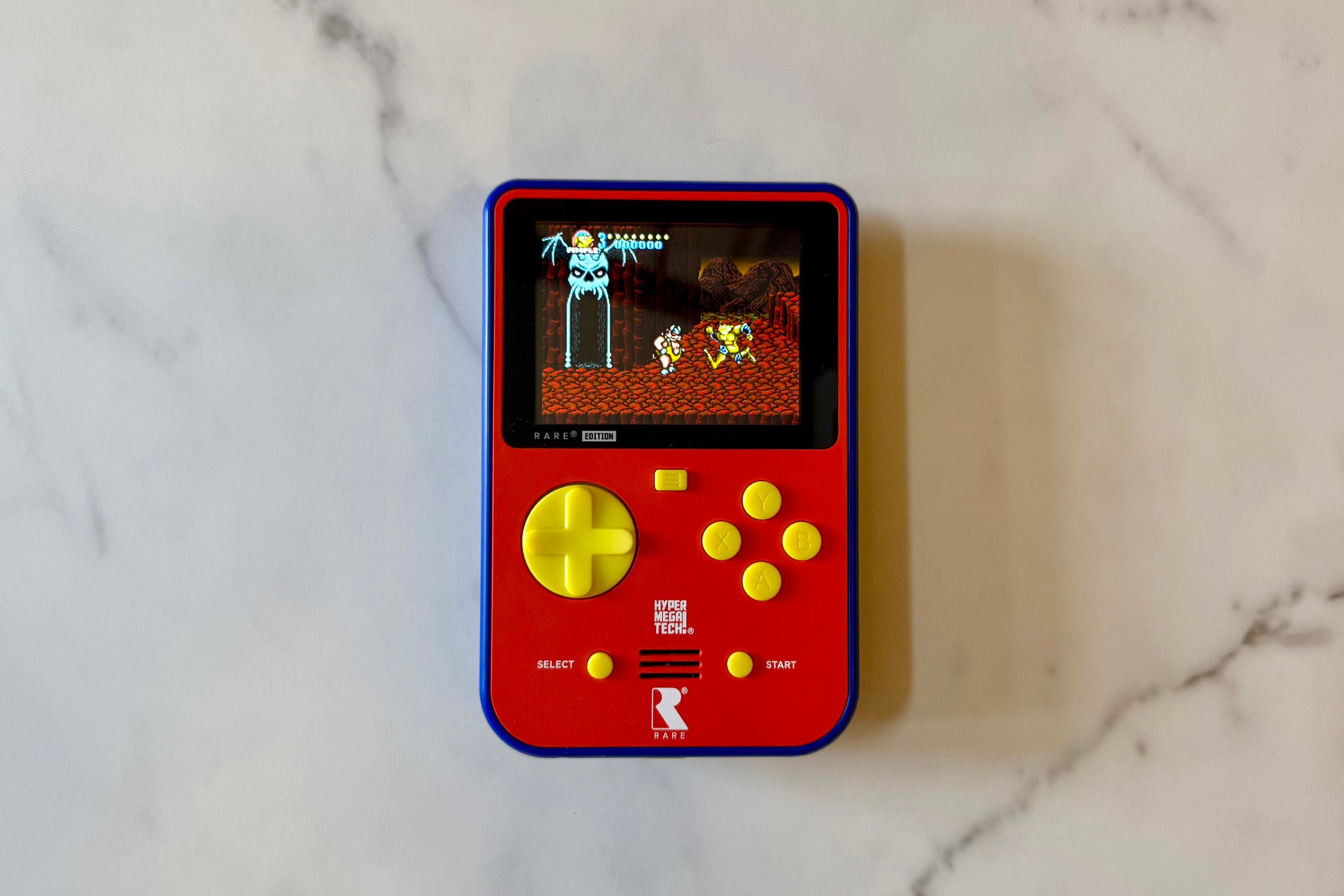
For obvious reasons, you won’t be able to enjoy the co-op modes on the Super Pocket, but everything else is spot on.
Game Boy Color
Conker’s Pocket Tales (1999) is the lone Game Boy Color representative. It’s a top-down, action-adventure game that serves as a family-friendly spin-off to the Conker series.
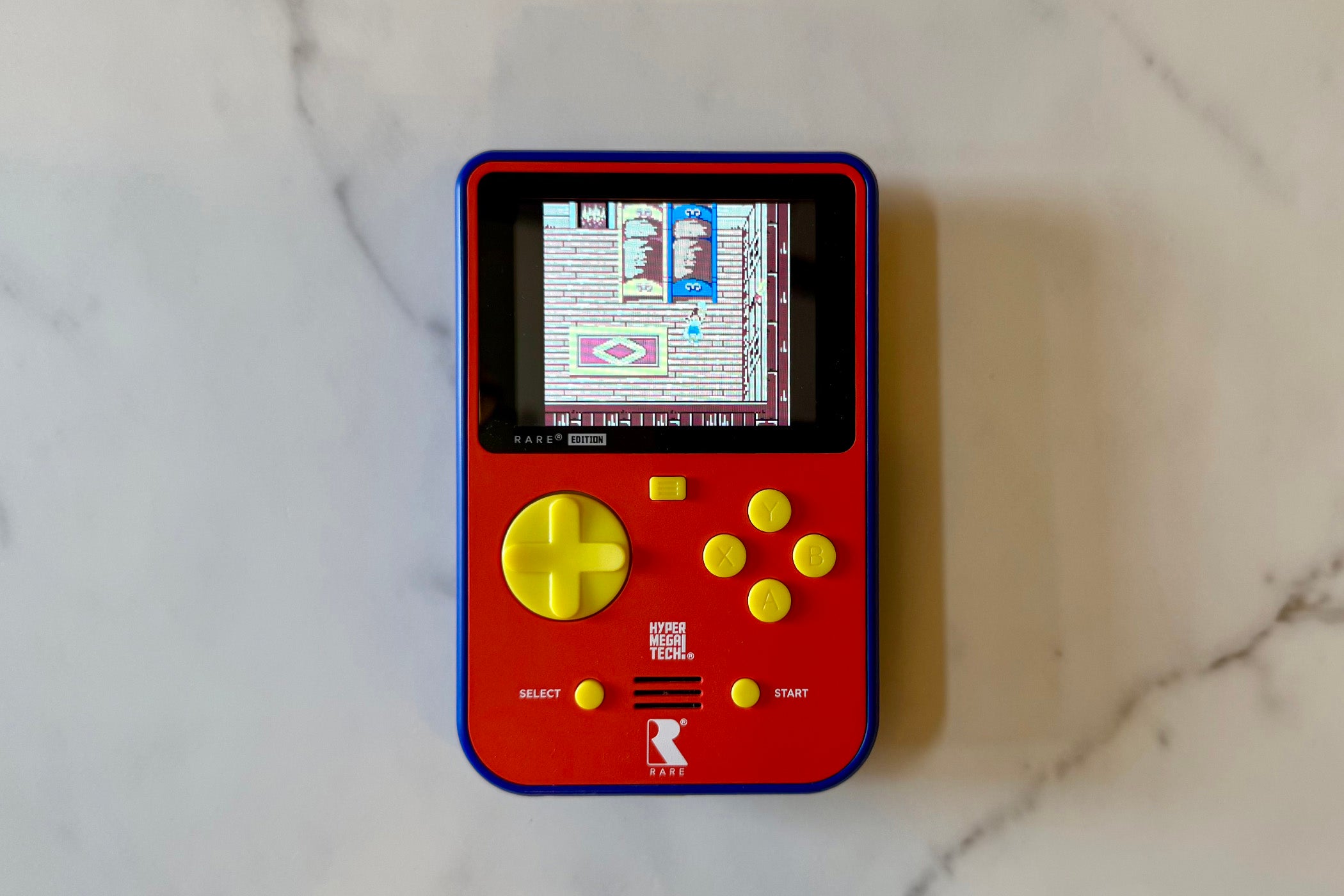
Since it’s originally a handheld game, Conker’s Pocket Tales plays perfectly on the Super Pocket and is a refreshing change-of-pace from the usual punishing difficulty of most Rare games.
HyperMegaTech Super Pocket Rare Edition – Cartridge Games
The Super Pocket’s cartridge slot opens up access to the 87, and counting, Evercade collections, which carry anywhere from one to 20 additional games. It’s an impressive list that totals around 750 total games to date, although not every game is the best match for the Super Pocket’s built-in controls. This is especially true as Blaze opens up more support for games that benefit from analog controls.
As stated in my previous Super Pocket review, besides certain missing features, like TATE mode, and awkward placement of its shoulder buttons, the other missing functionality is online connectivity. As such, the Super Pockets don’t get access to firmware updates or free games of the month, and are also unable to apply any updates to cartridges. On the rare chance a cartridge needs an update to run properly on the Super Pocket, it needs to be done on a mainline Evercade console, handheld, or bartop.
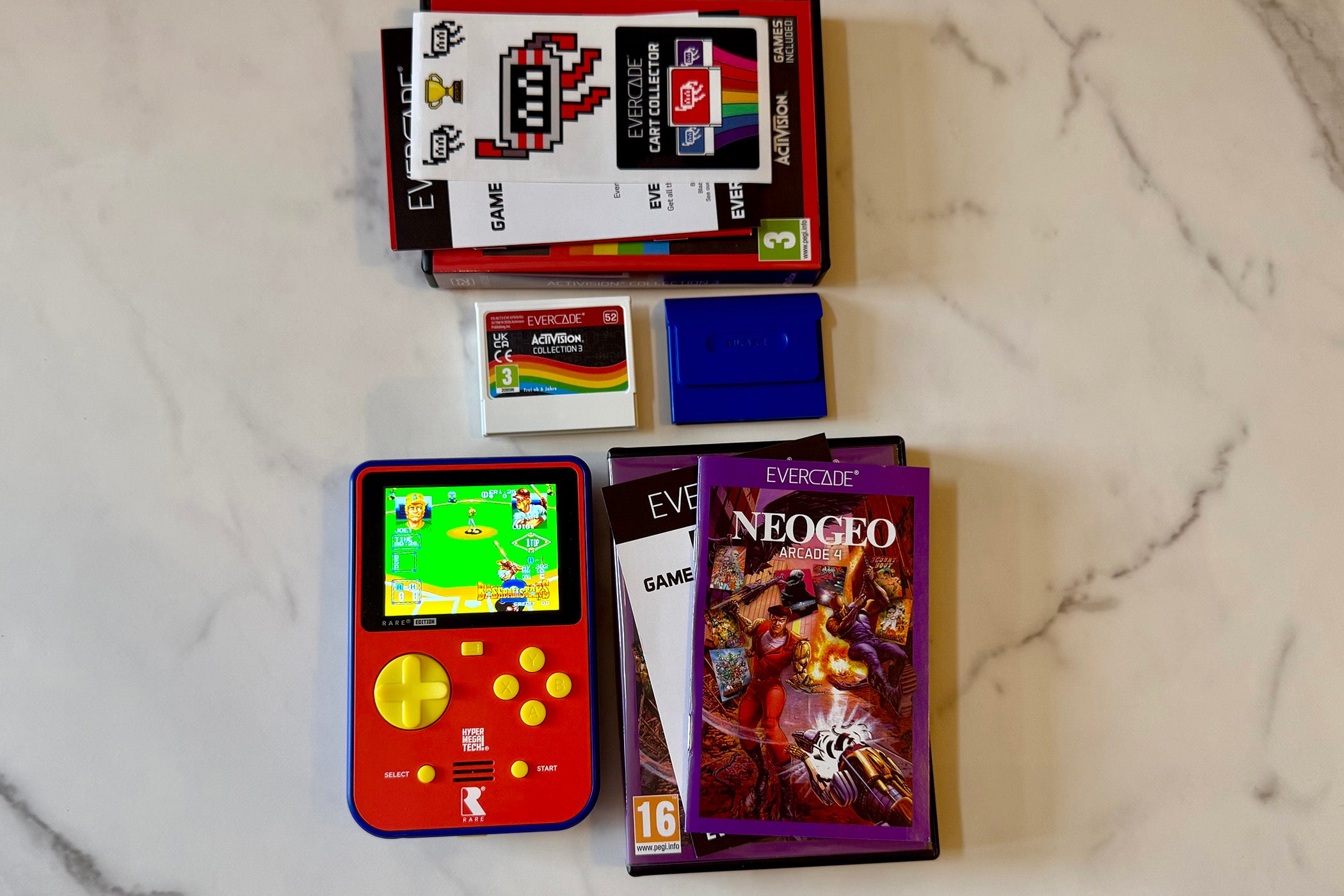
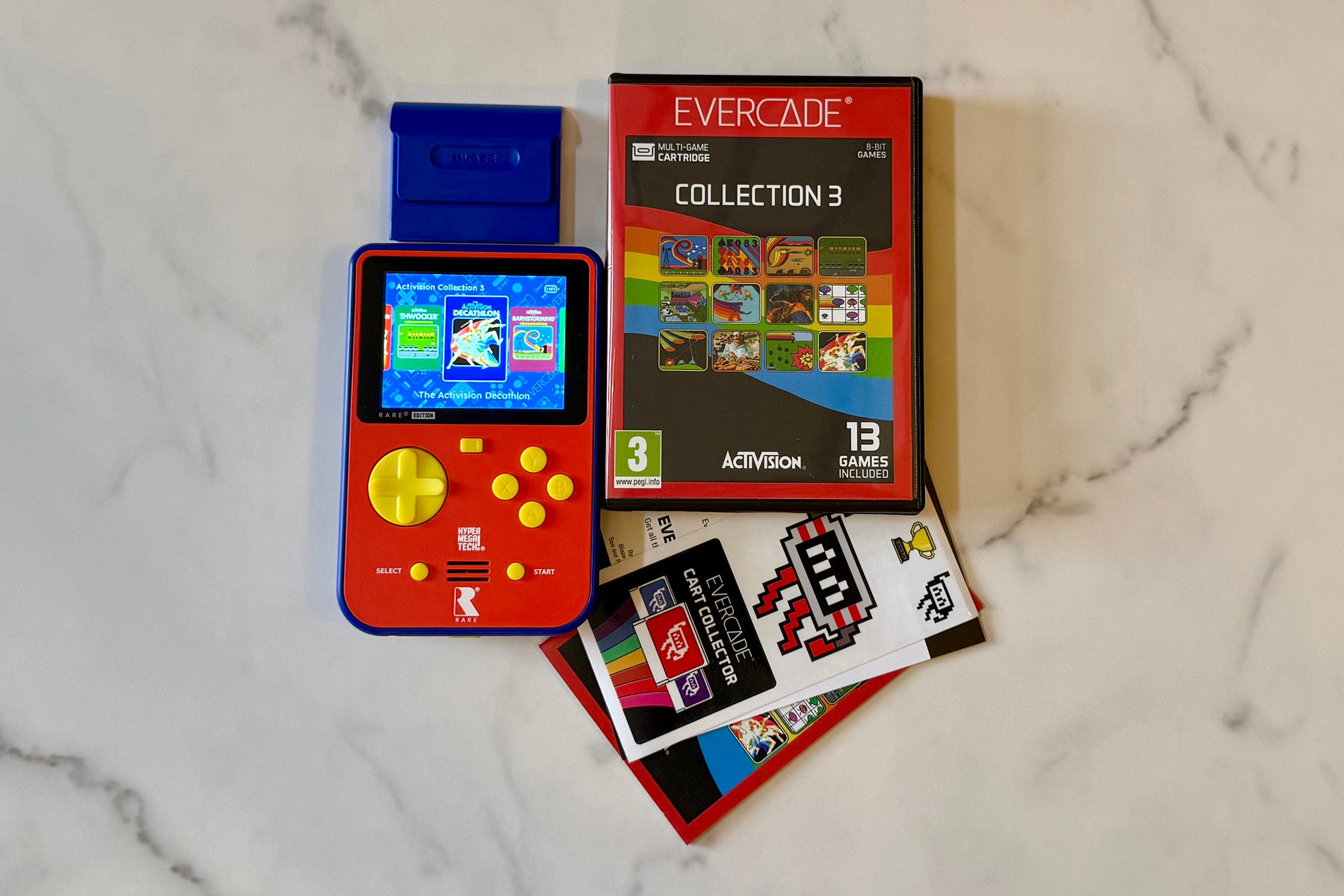
With all of that in mind, the Evercade cartridge collection is generally friendly to the Super Pocket’s display and controls. Along with the Super Pocket, Blaze sent over the cartridge for NeoGeo Arcade 4, which features eight NeoGeo arcade games, and Activision Collection 3, which features 13 Atari 2600 games. Both of those recent cartridges are near perfect examples of games that work great on the Super Pocket, thanks to matching controls for the former, and low resolution games for the latter (in fact, the eighth Super Pocket is confirmed to be an Activision Edition). Of course, Activision Collection 3 features Kaboom! (1981), which would normally be a good thing, but not without a paddle controller. Otherwise, no complaints.
If you find you’d prefer to experience the marquee titles on a TV or with native analog sticks, it’s worth noting that Blaze is releasing a standalone Banjo-Kazooie Double Pack (which includes the sequel Banjo-Tooie) soon, highlighting the versatility of this wider ecosystem. That cartridge is also included as a pack-in with the upcoming Evercade Nexus.
Bill Loguidice is a contributing freelancer for IGN specializing in video game and computer hardware and accessories. He has several decades of experience and has written for a wide variety of publications. Bill has authored a dozen mass market books and was a writer and producer on a major feature film documentary on the history of video games.