A new House proposal would block members of Congress and their immediate families from taking part in certain prediction market trades linked to government decisions, political developments, and information obtained through public service.
House Administration Committee Chairman Bryan Steil introduced the Stop Lawmakers from Predicting Act on June 18. The measure seeks to update federal ethics rules by preventing lawmakers, spouses, and dependent children from earning money through prediction market positions connected to events they may learn about through congressional work.
Steil said the goal is to eliminate concerns that elected officials could benefit from privileged information.
“The American people deserve to know their Member of Congress is not profiting off insider information. The Stop Lawmakers from Predicting Act ensures that cannot happen,” said Chairman Steil. “This legislation is critical to restoring the public’s trust in their elected officials. Lawmakers should be writing policy, not wagering on its outcome.”
Prediction market trades proposal targets concerns over insider information and political wagering
According to the bill, a “covered individual” would include any member of Congress, a lawmaker’s spouse, or a dependent child. The legislation would prohibit those individuals from entering into or offering to enter into any agreement, contract, or transaction that depends on the occurrence, nonoccurrence, or extent of the occurrence of a specific government policy, a government action, a political outcome, or any other event that comes to the attention of the covered individual as a result of congressional service.
It would apply regardless of whether the event is directly connected to the official congressional duties of the member involved.
The House Administration Committee pointed to growing scrutiny surrounding prediction markets and the possibility that participants with access to nonpublic information could gain an advantage. Committee officials also referenced reports involving candidates who allegedly wagered on their own elections and noted that current federal law does not specifically ban lawmakers from these markets.
The proposal arrives as the prediction market industry faces broader questions about insider activity. Recent reports have showcased efforts by platforms including Kalshi and Polymarket to strengthen policies aimed at preventing insider trading and misuse of confidential information. It has fueled debate over whether additional safeguards are needed as prediction markets become more and more widespread.
Congress has also seen related legislative efforts. Earlier proposals, including the BETS Off Act, sought to limit prediction market participation by government officials and address concerns about conflicts of interest involving public servants.
If Steil’s bill becomes law, congressional ethics offices would oversee compliance and provide guidance on terms not clearly defined in the statute.
Violations would trigger financial consequences. Anyone found in breach of the restrictions would owe either $2,000 or 10% of the value of the prohibited transaction, whichever is greater. Any profits earned from the activity while covered by the law would also have to be surrendered.
The measure further states that official office accounts and campaign funds could not be used to pay those penalties. Money collected through enforcement would be directed to the U.S. Treasury’s general fund.
Former lawmakers would not escape enforcement. Ethics officials could refer unpaid penalties to the Department of Justice if a member leaves office before satisfying the requirement.
The bill would take effect 180 days after enactment and must pass both chambers of Congress before reaching the president’s desk.
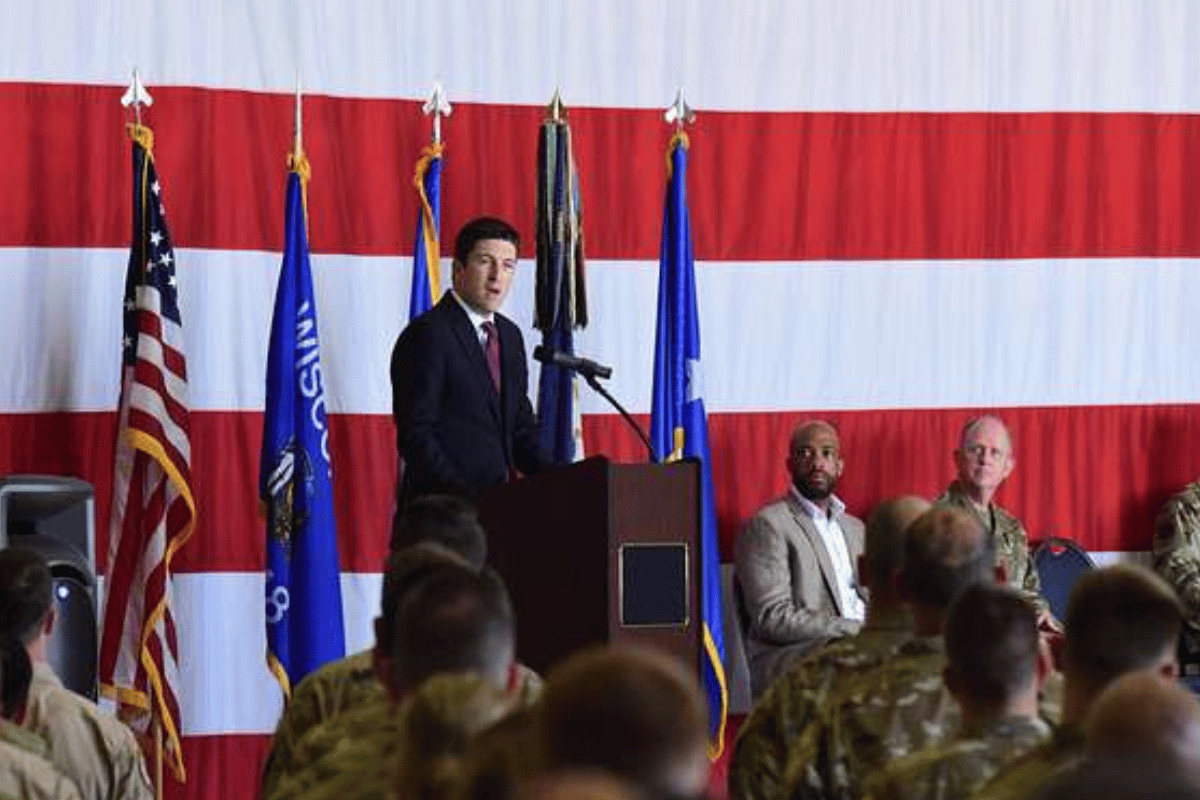
Featured image: Defense Visual Information Distribution Service
The post Steil introduces bill restricting congressional prediction market trades appeared first on ReadWrite.